
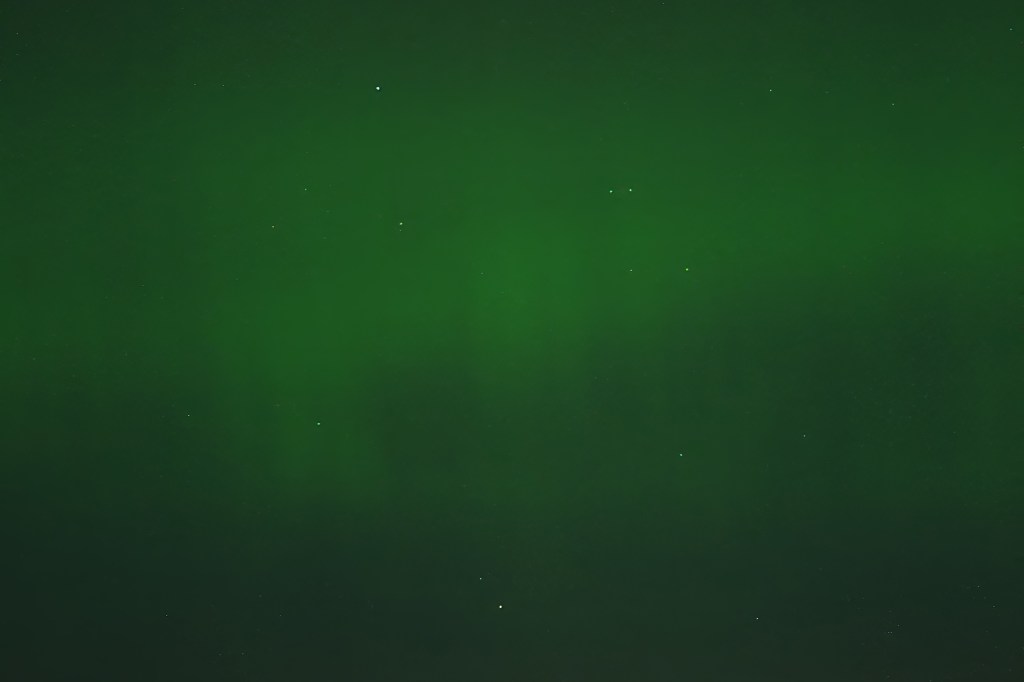
(An aurora borealis is visible in northwest Pennsylvania and southern New York on Oct. 10, 2024. Brandy Heathcote/File Photo)
By: Kenji Heathcote
Recently, residents of Pennsylvania have been treated to a rare and spectacular sight: the aurora borealis, or northern lights, lighting up the night sky. This natural phenomenon, typically seen in polar regions, has left many wondering about the science behind it and why it has been visible so far south.
The aurora borealis occurs when charged particles from the sun, known as solar wind, collide with the Earth’s magnetic field. These particles are funneled towards the poles by the magnetic field, where they interact with gases in the Earth’s atmosphere, such as oxygen and nitrogen. This interaction releases energy in the form of light, creating the stunning displays of green, pink, red, and purple that we see in the sky.
According to NASA, recent solar activity has been particularly intense, resulting in stronger solar winds and more frequent geomagnetic storms. These storms can extend the reach of the auroras, making them visible in regions much further from the poles than usual.
The Space Weather Prediction Center (SWPC) has reported several strong geomagnetic storms over the past few weeks, which have contributed to the increased visibility of the aurora in places like Pennsylvania.
Dr. Liz MacDonald, a space physicist at NASA, explains, “When the sun is more active, it releases more solar material into space. This material, when it interacts with our magnetic field, can create more vibrant and widespread auroras.”
As solar activity continues to fluctuate, keep an eye on space weather forecasts for more opportunities to witness this breathtaking natural light show.
For those interested in seeing the aurora, it’s best to find a dark location away from city lights. Clear skies and a view of the northern horizon will increase your chances of catching a glimpse of this celestial spectacle.
 Dragon Spitfire
Leave a comment